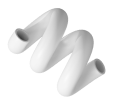
Colorful designs surrounding spinaconda for creative artists
- Colorful designs surrounding spinaconda for creative artists
- Deconstructing the Spinaconda: Form and Structure
- Exploring Abstract Representations
- Color Palettes and the Spinaconda
- Symbolism Through Hue and Tone
- Techniques for Emphasizing Movement and Texture
- Utilizing Impasto and Layering Methods
- The Spinaconda as a Metaphor: Psychological Interpretations
- Beyond Visual Arts: Applications in Design and Beyond
Colorful designs surrounding spinaconda for creative artists
The world of digital art and design is constantly evolving, with new trends and tools emerging at a rapid pace. One captivating concept gaining traction amongst creative artists is the visualization and artistic representation of the spinaconda. This isn’t about constricting reptiles, but an imaginative exploration of interwoven forms, dynamic patterns, and vibrant color palettes inspired by the serpentine imagery. It provides a unique challenge for artists, demanding a blend of technical skill and abstract thinking, moving beyond realistic depiction towards symbolic and emotive expression. The potential for diverse interpretations allows artists to inject their personal style and vision into the core idea.
The allure of the spinaconda as an artistic motif lies in its inherent duality. It represents both power and fluidity, danger and beauty, confinement and liberation. These contrasting elements offer a rich tapestry of themes to explore, making it particularly appealing to artists who seek to convey complex narratives through their work. The form itself is a compelling starting point, allowing for experimentation with texture, light, and shadow to create visually stunning compositions. Whether it’s manifested in digital paintings, sculptures, or even textile designs, the spinaconda’s visual impact is undeniable. It's become a symbol for a dynamic approach to artistic creation.
Deconstructing the Spinaconda: Form and Structure
When approaching the depiction of a spinaconda, artists often begin by deconstructing the idea into its fundamental components. Rather than attempting a literal representation, they focus on the essence of the shape – the coiling, the interlocking patterns, the sense of movement. This allows for greater flexibility and encourages the development of original interpretations. Consider the basic geometric shapes that contribute to the overall form – spirals, curves, and interlocking loops. These shapes can be manipulated and distorted to create a sense of unease, dynamism, or serenity. The challenge isn't simply to draw a serpentine form, but to convey the feeling of being enveloped or constricted, or, conversely, the power of release and expansion.
Exploring Abstract Representations
Abstract representation presents a particularly fruitful avenue for exploring the spinaconda concept. Artists can move beyond representational accuracy and focus on capturing the emotional resonance of the form. This might involve using bold colors and textures to evoke a sense of danger and excitement, or softer hues and flowing lines to suggest tranquility and grace. The use of negative space is crucial in abstract interpretations, allowing the viewer’s eye to complete the form and engage with the artwork on a deeper level. Experimentation with different mediums – acrylics, oils, watercolors, digital painting software – can further enhance the expressive potential of the abstract spinaconda. For many, it's a departure from traditional depictions.
| Medium | Technique | Associated Emotion |
|---|---|---|
| Oil Paint | Impasto, layering | Weight, intensity, confinement |
| Watercolor | Blending, washes | Fluidity, fragility, subtlety |
| Digital Painting | Complex layering, filters | Surrealism, distortion, hyper-realism |
| Sculpture (Metal) | Welding, forging | Strength, resilience, permanence |
The table above illustrates how differing art mediums can drastically alter the perceived emotion associated with a spinaconda-inspired piece. One key element is mindful medium selection to communicate a desired emotional tone.
Color Palettes and the Spinaconda
The choice of color palette is paramount in conveying the mood and meaning of a spinaconda artwork. Traditionally, serpentine imagery is often associated with greens, browns, and yellows, reflecting the colors of the natural world. However, artists are increasingly experimenting with unconventional color schemes to challenge these assumptions and create a more striking visual impact. A monochrome palette, for example, can emphasize the form and texture, while a vibrant, highly saturated palette can evoke a sense of energy and excitement. The use of complementary colors – those opposite each other on the color wheel – can create visual tension and dynamism. Understanding color theory and its psychological effects is crucial for achieving a desired aesthetic.
Symbolism Through Hue and Tone
Beyond aesthetics, color can also carry symbolic weight. Red, for example, is often associated with passion, danger, and aggression, while blue evokes feelings of calmness, serenity, and trust. By carefully selecting colors, artists can imbue their spinaconda artwork with layers of meaning, inviting viewers to interpret the work on a deeper level. Consider the use of analogous colors – those adjacent to each other on the color wheel – to create a harmonious and balanced composition. Subtle variations in tone and saturation can also add depth and complexity to the artwork. Exploring the emotional resonance of each hue is essential for impactful storytelling.
- Emerald Green: Represents vitality, renewal, and the natural world.
- Crimson Red: Symbolizes passion, danger, and primal energy.
- Sapphire Blue: Evokes calmness, mystery, and emotional depth.
- Golden Yellow: Represents intellect, optimism, and warmth.
- Onyx Black: Suggests power, elegance, and the unknown.
These color associations aren’t absolute, of course, an artist’s intention will influence how a hue is perceived.
Techniques for Emphasizing Movement and Texture
A compelling spinaconda artwork often captures a sense of dynamic movement. Achieving this effect requires a mastery of techniques that suggest fluidity, flexibility, and power. Artists can employ techniques such as blurred lines, swirling patterns, and directional brushstrokes to create the illusion of motion. The skillful use of light and shadow is also crucial, as it can accentuate the contours of the form and create a sense of depth. Layering textures – through the application of different paints, mediums, or even collage elements – can add visual interest and complexity. Using techniques to imply movement and tension is vital to capturing the spirit of this imagery.
Utilizing Impasto and Layering Methods
Impasto, the technique of applying paint thickly to the canvas, can create a highly textured surface that emphasizes the physicality of the spinaconda form. This technique is particularly effective when used in conjunction with layering methods, where different colors and textures are built up over time to create a sense of depth and complexity. Glazing, the application of thin, transparent layers of paint, can also be used to create subtle variations in color and tone. Experimenting with different tools – brushes, palette knives, sponges – can yield a wide range of textural effects. The tactile quality of the artwork can significantly enhance its emotional impact, drawing the viewer in and encouraging them to explore the surface.
- Sketching: Begin with loose sketches to explore compositional ideas.
- Underpainting: Establish a foundation of color with a thin underpainting.
- Layering: Build up textures and colors gradually, using layering techniques.
- Detailing: Add fine details and highlights to enhance the form.
- Varnishing: Protect the artwork and enhance its colors with a protective varnish.
These are useful steps for developing a cohesive and visually striking piece. Following these steps provides structure for the creative process.
The Spinaconda as a Metaphor: Psychological Interpretations
Beyond its visual appeal, the spinaconda carries significant metaphorical weight. It can be interpreted as a symbol of repressed emotions, untapped potential, or the struggle between opposing forces. The constricting nature of the form can represent feelings of anxiety, fear, or limitation, while the power and grace of the creature can symbolize strength, resilience, and transformation. Artists are often drawn to this imagery because it allows them to explore complex psychological themes in a visually compelling way. The ambiguity inherent in the spinaconda form invites viewers to project their own interpretations onto the artwork, creating a personal and meaningful connection.
The image also lends itself to interpretations related to cycles of life, death, and rebirth, given its association with shedding skin and renewal. An artist exploring themes of personal growth or overcoming adversity might find the spinaconda a particularly resonant symbol. It allows for an exploration of the darker aspects of the human psyche, prompting introspection and self-discovery. It's a visual representation of internal conflict and the journey towards resolution. The spinaconda can be a powerful symbol.
Beyond Visual Arts: Applications in Design and Beyond
The influence of the spinaconda aesthetic extends beyond the realm of traditional visual arts. Its dynamic forms and intricate patterns are increasingly finding applications in various design disciplines, including graphic design, fashion, and architecture. In graphic design, the spinaconda motif can be used to create logos, illustrations, and typography that convey a sense of energy and sophistication. In fashion, the patterns and textures inspired by the spinaconda can be incorporated into clothing, accessories, and textiles. Architects are exploring ways to incorporate the organic shapes and flowing lines of the spinaconda into building designs, creating spaces that are both visually striking and emotionally engaging. Exploring the versatility of this aesthetic holds great potential.
The adaptable nature of the spinaconda motif makes it a valuable asset for designers and artists across a wide range of fields. It's a visual language that transcends cultural boundaries and speaks to a universal appreciation for beauty, strength, and transformation. Further exploration will likely reveal even more innovative and unexpected applications for this compelling imagery. The challenge lies in harnessing its power responsibly and creatively, pushing the boundaries of artistic expression and design innovation.